
Services for Children
Does your child have BIG feelings? Are you tired of getting phone calls from the school about misbehaviors? Are your child’s worries controlling your family’s schedule?
Behavior is communication. Through child and child/parent therapy, you and your child can learn to communicate in safe ways, set limits, and get needs met. Rock Creek Forest Counseling offers a variety of therapeutic interventions to help children and caregivers.

Play Therapy
Play therapy is a way of being with the child that honors their unique developmental level and looks for ways of helping in the “language” of the child: play. Play therapy differs from regular play in that the therapist helps children to address and resolve their own problems. Therapists strategically use play therapy to help children express what is troubling them when children do not have the verbal language to express their thoughts and feelings.
Play therapy can help children with a range of social, emotional, and behavioral challenges, including:
emotion regulation
anxiety
depression
ADD/ADHD
anger management
trauma
grief and loss
divorce and family conflict
academic challenges
self esteem and self confidence
Through play therapy, children learn to communicate with others, express feelings, modify behavior, develop problem-solving skills, and learn a variety of ways of relating to others. Play provides a safe psychological distance from their problems and allows expression of thoughts and feelings appropriate to a child’s development.
Rachel is a Registered Play Therapist™ with the Association for Play Therapy.

Synergetic Play Therapy™: Healing the Nervous System Through Play
Synergetic Play Therapy is a researched-informed model of play therapy blending the therapeutic power of play with nervous system regulation, interpersonal neurobiology, attachment, mindfulness, and therapist authenticity. In SPT, the child’s symptoms are understood as symptoms of a dysregulated nervous system. SPT was developed from the understanding that it is possible to regulate another person’s nervous system by first regulating your own. The fields of Neuroscience and Interpersonal Neurobiology have provided the research to confirm that profound healing can occur when therapists are able to attune to themselves and co-regulate through the dysregulation that arises in the child’s play. This can allow the child to move towards their challenging thoughts, feelings and body sensations, and heal through re-patterning their nervous system.
Rachel is a Certified Synergetic Play Therapist, which means she has completed 90 hours of additional training and supervision in Synergetic Play Therapy.

Animal Assisted Play Therapy®
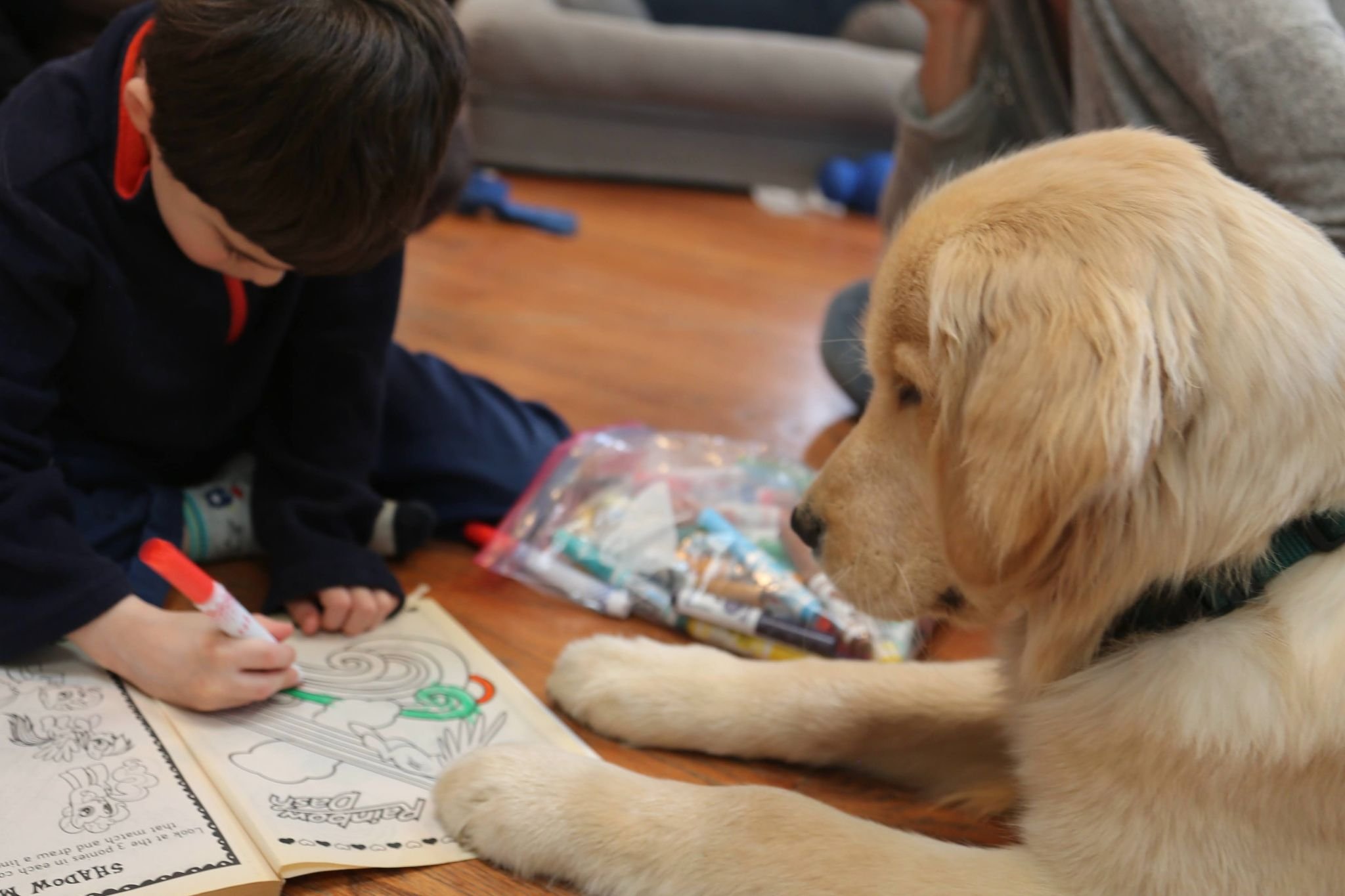
AAPT is the integrated involvement of animals in the context of play therapy, in which appropriately trained therapists and animals engage with child, family, and adult clients in interventions aimed at improving the client’s psychosocial health, while simultaneously ensuring the animal’s well-being and voluntary engagement in the process. Play and playfulness are essential ingredients of the interactions and the relationship.
AAPT emphasizes the importance of relationships—the relationships between therapists and their animals, between therapists and clients, and between clients and animals. All activities and decisions are made within the frame of mutually respectful, beneficial, and fun relationships.
AAPT is an empowerment approach, focusing on building strengths while resolving difficulties. Primary mental health goal areas include:
Self-efficacy
Attachment and relationship
Empathy
Self-regulation
Specific problem resolution
Rachel is a Certified Animal Assisted Play Therapist®, and Rogue and Loki are approved therapy dogs with the International Institute for Animal Assisted Play Therapy.

Supportive Parenting for Anxious Childhood Emotions (SPACE)
Are your child’s worries out of control? Do you find yourself planning your day around your child’s worries and demands, to avoid tantrums and meltdowns?
Parents who participate in SPACE will learn skills and tools to help their child overcome anxiety. SPACE treatment focuses on changes that parents can make to their own behavior; they do not need to make their child change! When SPACE treatment is successful children feel less anxious and function better following treatment.

Caregiver Role
Research suggests play therapy is an effective mental health approach, regardless of age, gender, or the nature of the problem, and works best when a parent, family member, or caretaker is actively involved in the treatment process. While giving children a safe space to express and process feelings in therapy is important, and the therapist will maintain a child’s confidentiality in therapy, caregiver involvement is essential for addressing any emotional or behavioral needs a child has. The amount and type of involvement may change depending on your child and their changing needs. Caregiver involvement in play therapy treatment may involve:
Weekly check-ins at the beginning of you child’s session
Caregiver/child sessions
Caregiver sessions, without the child
Read more about our services for parents, families, and caregivers.

Information provided courtesy of the Association for Play Therapy, Synergetic Play Therapy Institute, International Institute for Animal Assisted Play Therapy, and SPACE Treatment.